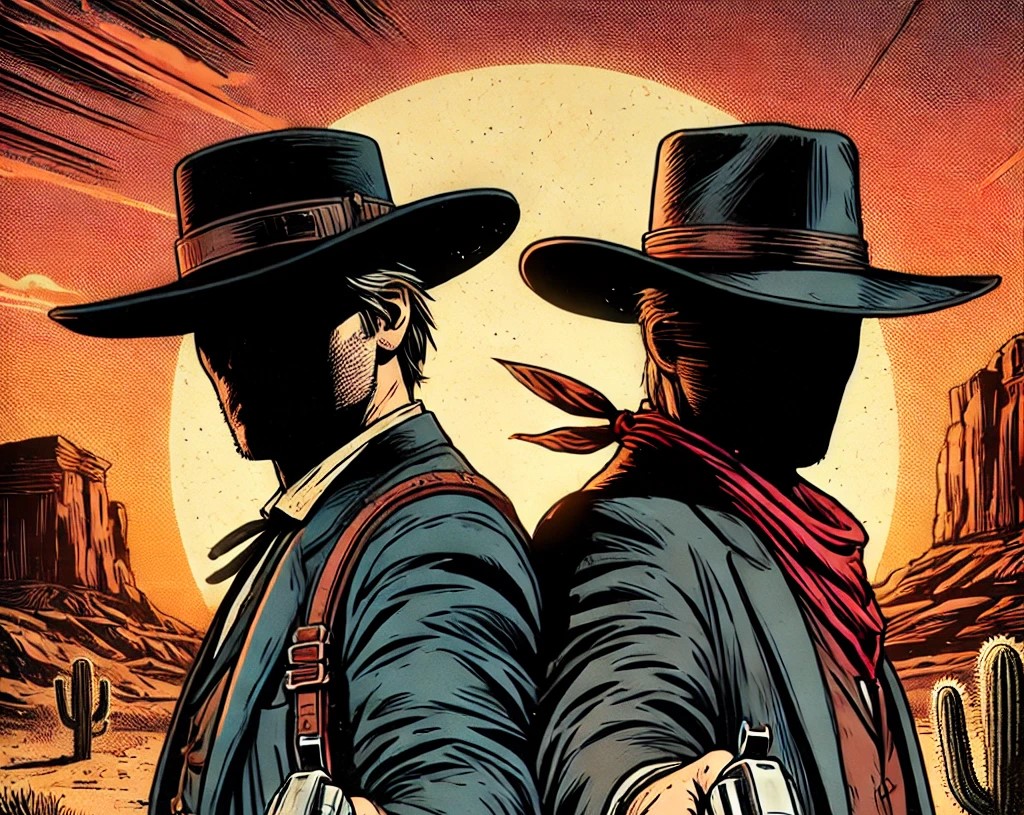


Nippon Steel Corporation's (hereinafter, "Nippon Steel") acquisition of US Steel (hereinafter, "USS") is already facing new developments. Cleveland-Cliffs (hereinafter, "Cliffs"), a major competitor in the US steel industry, has indicated the possibility of a competing bid. Cleveland-Cliffs CEO Goncalves has even made comments to the effect that "Japan is more evil than China," openly displaying his antagonism. From this perspective alone, it appears that Nippon Steel is facing an extremely difficult situation, confronting not only the US government but also a major competitor.
■Press Release Revealing Cliffs' Anger and Frustration
The comments made when Cliffs and its CEO Goncalves announced the possibility of a competing bid (however, only if Nippon Steel completely withdraws) reveal strong indignation and antagonism toward Nippon Steel. (The following is a partial excerpt from a complete translation by ChatGPT. Bold and underlines added by our company)
Statement by Chairman, President and CEO Lourenco Goncalves
"As of this morning, Nippon Steel and U.S. Steel continue to desperately play the blame game in an attempt to distract from their own failures. Today's lawsuits against the American government, the United Steelworkers (USW), and Cleveland-Cliffs represent the shameless behavior of U.S. Steel and Nippon Steel attempting to blame others for the disaster they have brought upon themselves. U.S. Steel's management was unable to obtain personal compensation. And now that it has become clear that they have failed miserably toward the (USS) shareholders they have always claimed to be 'serving,' they are short-temperedly lashing out as a result. Once again, a poor behavioral choice.
It was not only Cleveland-Cliffs and the USW who recognized the negative impact on national security that this acquisition would bring. This deal immediately drew bipartisan opposition, including from President Trump, who has pledged multiple times to 'block this deal.' Immediately after this deal was announced on December 19, 2023, then-Senators J.D. Vance, Marco Rubio, and Josh Hawley requested that CFIUS (Committee on Foreign Investment) block the sale of U.S. Steel to Nippon Steel, correctly pointing out that 'trade protection can and should attract foreign investment to expand domestic production and create American jobs. However, this corporate acquisition does not align with that goal. Allowing foreign companies to acquire American companies and enjoy the benefits of our trade protections would undermine the purpose for which these protections were established.' (omitted)
The final decision to block the deal with Nippon Steel is the result of a year-long national security review, emphasizing the importance of keeping critical domestic steel infrastructure under American control. More than China, Japan has a decades-long history of steel overproduction and harmful steel dumping into America. The destruction of middle-class, high-paying jobs in the steel industry is due to Nippon Steel's unfair trade practices. The American government has appropriately recognized that allowing Nippon Steel to strengthen its influence through this acquisition would be a direct threat to critical elements of national security including the economy, workforce, infrastructure, and defense.
The fundamental cause of this problem is that Nippon Steel has engaged in overproduction domestically in Japan, resulting in a harmful trading history in the American market. The risk that this deal would not be approved was well recognized, and in fact, David Burritt sold some of his personal shares at $50.01 per share on December 18, 2023, the day of the announcement. U.S. Steel made the wrong decision to reject solutions from American companies and push forward with a cash sale to Nippon Steel, which is notorious for circumventing American trade laws. Instead of acknowledging this massive error in judgment, U.S. Steel, its CEO David Burritt, and Nippon Steel are resorting to blame-shifting and legal theatrics. With each action, David Burritt deepens his own shame.
Their lawsuits are completely groundless. We are well prepared for legal battles and look forward to revealing the facts in court. (End of quote)
This is quite an extreme document for an official release from a representative American company. While not explicitly stated in this document, according to reports, Goncalves also appears to claim that Nippon Steel taught China methods of steel overproduction and dumping. From our perspective, their key arguments can be summarized and paraphrased into approximately the following three points:
1. US Steel's management pursued their own interests while claiming to maximize shareholder value.
2. Nippon Steel, more skillfully than Chinese companies, has exploited loopholes in US trade laws and damaged the US market through dumping of Japanese steel products.
3. This acquisition would not lead to the job expansion or increased US production that US trade laws are intended to achieve.
While interpretations of these claims may vary depending on one's position, at minimum, Nippon Steel is facing not only the US government but also competitor Cliffs, and ultimately Nucor as a potential joint acquirer in the background, forcing it into a two-front or three-front battle.
■For Nippon Steel, Cliffs' Continued Consideration Announcement is "Within Expected Range"
However, this development is likely "within the expected range" for Nippon Steel. On January 6, 2025, immediately after President Biden issued a stop order for this acquisition, Nippon Steel filed a lawsuit against the US government. While not widely reported in Japan, Nippon Steel simultaneously filed a lawsuit against Cliffs. Nippon Steel took a fighting stance against Cliffs first, and Cliffs has now taken countermeasures in response. So why did Nippon Steel preemptively sue Cliffs? Nippon Steel's press release explains it as follows.
■Nippon Steel's Reasons for Suing Cliffs, Mr. Goncalves, and USW President (Excerpt from Press Release)
Filed a complaint (hereinafter, "complaint") against Cleveland-Cliffs Chief Executive Officer (CEO) Lourenco Goncalves (hereinafter, "CEO Goncalves") and USW President David McCall (hereinafter, "President McCall"), as well as a motion for preliminary injunction and expedited proceedings at the US District Court for the Western District of Pennsylvania. These defendants, as part of an illegal scheme to monopolize the critical US steel market, conspired to engage in anti-competitive and systematic illegal activities to prevent the acquisition of US Steel by any party other than Cliffs. The complaint seeks an injunction to prevent Cliffs, CEO Goncalves, and President McCall from engaging in further conspiratorial and anti-competitive acts, and to impose substantial monetary damages for their actions.
This lawsuit targets not only Cliffs as a corporation but also CEO Goncalves personally, who holds representative authority, and USW President McCall. This can be considered a quite aggressive lawsuit. What Nippon Steel is suing for, by targeting individuals even if they are representative directors as institutional representatives and seeking damages, reveals the firmness of Nippon Steel's determination. If they were to lose, Nippon Steel would face enormous compensation including defamation damages. This appears to be a lawsuit filed with considerable evidence and confidence in victory.
■Depending on Future Developments, There Could Be Significant Impact on the Overall M&A Market
It is impossible to speculate on what results such litigation might achieve from a position that does not know internal information or detailed behind-the-scenes litigation matters. However, the outcome of this deal itself will likely result in one of the following three conclusions:
Case 1: Nippon Steel's acquisition is approved and completed as originally planned
Case 2: Nippon Steel's acquisition is not approved by authorities/courts, and the Cliffs-Nucor alliance acquires
Case 3: Nothing happens (blank slate) or a completely different third party makes a new acquisition proposal
Regarding Case 3 above, since various more detailed cases can be anticipated, there is little point in predicting its outcome at this time. First, the focus is on whether it will be settled in Case 1 or Case 2. Even so, resolution may take years in some cases.
■The Key is the Revlon Standard. Depending on the Results, the Impact on the M&A Industry Could Be Significant.
What draws attention in this deal is indeed how much weight will be given to the Revlon Standard. The Revlon Standard is an important precedent criterion regarding fiduciary duty of boards of directors in US corporate governance, applied when companies enter a sale process.
While omitting details, its spirit is that a board of directors receiving an acquisition proposal "must prioritize the acquisition candidate that presented the highest price." This standard derives from the 1986 precedent "Revlon, Inc. v. MacAndrews & Forbes Holdings, Inc." One of the most important points of this Revlon Standard concerns the duties of the board of directors.
■Once Entering the Sale Process, the Board's Duties Focus on "Maximizing Shareholder Value"
Under the Revlon Standard, when a board receives an acquisition proposal and enters the sale process, directors' duties shift from "long-term value creation" to "maximizing shareholder interests." When wanting to reject an acquisition proposal, boards oppose for various reasons. For example, this acquisition candidate doesn't fit culturally. They would only engage in restructuring. There are no synergies. Employees wouldn't follow. The Revlon Standard basically does not recognize such defenses by boards and indicated "select the buyer who presented the best acquisition terms for shareholders."
This position holds that M&A beneficial to shareholders should be realized even if the board opposes, and also contributed to reinforcing the theoretical legitimacy of hostile takeovers. This Revlon precedent from 1986 led US shareholder capitalism toward more directly pursuing shareholder interests. This Revlon Standard is considered applicable to foreign acquisitions of Japanese companies, serving as one of the theoretical pillars for legitimacy claimed by activists particularly in recent TOB cases.
■Depending on This Outcome, Changes May Occur in Such M&A Trends
If the US government denies Nippon Steel's acquisition and the Cliffs-Nucor alliance ends up acquiring as a result, would that constitute M&A in accordance with the Revlon Standard? Clearly not. At least based on current reports, Cliffs' acquisition offer is around $30 per share, only about 60% of the $55 TOB price agreed between Nippon Steel and US Steel. This represents an amount that virtually eliminates the entire premium that Nippon Steel added to the market price. According to the Revlon Standard, Cliffs' acquisition proposal would significantly impair the value that should be returned to US Steel shareholders compared to Nippon Steel's proposal.
Certainly, from a third-party perspective, one could argue that Nippon Steel's acquisition amount is too high and Cliffs' Valuation is more appropriate. If Cliffs executed an acquisition at the same amount as Nippon Steel, there's even the possibility of shareholder derivative suits from Cliffs' shareholders, who maintain strict standards for the US market. In our previous column, we evaluated Nippon Steel's acquisition offer price ($55) as "a price that reflects sincerity," but conversely, this could also be described as "a price that involves considerable strain." To complete the acquisition, Nippon Steel would not only bear ¥2.12 trillion (Enterprise Value in yen based on publicly disclosed materials from 2023, including debt) but also commit to paying retention bonuses to employees after the acquisition and making additional massive capital investments. For Nippon Steel, this could be described as an investment package assembled with the resolve of jumping off the stage of Kiyomizu Temple.
However, third-party Valuation is irrelevant to the Revlon Standard. The Revlon Standard is the principle that "whoever offers the highest price gets to buy," and if Cliffs' acquisition proceeds as expected, it would significantly impair the value that should belong to US Steel shareholders. From US Steel shareholders' perspective, this would warrant shareholder derivative litigation.
■Significant Impact on Future Global Cross-Border M&A Possible
Under the banner of capital liberalization, the US has continued missionary activities to make the principles of behavior in its domestic market universal axioms for the world. The Revlon Standard is one of the most prominent examples. If Nippon Steel's acquisition is resolved in a manner contrary to this, it would have a major impact on capital markets not only in the US but worldwide. If the US government itself makes decisions contrary to the Revlon Standard in its own country, forcing this on other countries would be a double standard and would easily be imagined to provoke significant backlash.
Wall Street, which has embodied the spirit of the Revlon Standard, is traditionally a Democratic stronghold and, frankly speaking, also an enemy of Trump. Will Trump declare a break with the globalism centered on Wall Street that has continued since 1986 by denying the Revlon Standard? Or, focusing on Trump's other face as a deal junkie, does the Revlon Standard concept of "sell to whoever buys for even one yen higher" "make sense"? The conclusion that the Trump administration, which will be established on January 20, reaches regarding this deal will have a major impact on future M&A transactions. This deal can indeed be said to be an important transaction that could become a symbolic case of the changing tide of the times, transcending the framework of private corporate transactions.